Showing posts with label Acts of the Apostles. Show all posts

Saturday, September 14, 2013

Faith and Reason

Acts 17:1-4 When Paul and his companions had passed through Amphipolis and Apollonia, they came to Thessalonica, where there was a Jewish synagogue. As was his custom, Paul went into the synagogue, and on three Sabbath days he reasoned with them from the Scriptures, explaining and proving that the Messiah had to suffer and rise from the dead. “This Jesus I am proclaiming to you is the Messiah,” he said. 4 Some of the Jews were persuaded and joined Paul and Silas, as did a large number of God-fearing Greeks and quite a few prominent women. (And then in 17:16-17:34)
1)    Do logical arguments for ideas in our faith appeal to you or not interest you? Why or why not?


Faith and reason are often portrayed as mortal enemies. (But Paul obviously would oppose this idea.) Definitely this is a perceived struggle since the Enlightenment. Probably since Galileo Galilei.

Firm Foundation
In 1616 the arguments against Copernicus’ theory that the earth went around the sun reached a fever pitch. Galileo went to Rome to defend it, but the church decided against it, based on three lines of scripture.

Psalm 93:1 The Lord reigns, he is robed in majesty; the Lord is robed in majesty and armed with strength; indeed, the world is established, firm and secure.

Psalm 96:10 Say among the nations, “The Lord reigns.” The world is firmly established, it cannot be moved; he will judge the peoples with equity.

1 Chronicles 16:30 Tremble before him, all the earth! The world is firmly established; it cannot be moved.
2)    How do you interpret these? Why do they not mean that the sun goes around the earth?


Opposition seemed to be loosening, encouraging Galileo to write about the idea as a theory. But the climate shifted suddenly, and in 1633 Galileo was tried and convicted of heresy, condemned to spend the rest of his life in house arrest. He died in 1648, having used that time to great effect, and is now called the father of physics.

Galileo held the Bible to be true, but did not take every passage literally, especially scripture that is a book of poetry. He believed Scripture true in that the sun does rise and set – the writers were describing what they saw.  So he believed that science did not contradict Scripture, as Scripture was discussing a different kind of movement of the earth, and not rotations.

Faith
Hebrews 11:1-3 Now faith is confidence in what we hope for and assurance about what we do not see.  This is what the ancients were commended for.  By faith we understand that the universe was formed at God’s command, so that what is seen was not made out of what was visible.

The rest of Chapter 11 is about the faith of the heroes of the Old Testament. Then Chapter 12 begins:
Hebrews 12:1-3 Therefore, since we are surrounded by such a great cloud of witnesses, let us throw off everything that hinders and the sin that so easily entangles. And let us run with perseverance the race marked out for us, fixing our eyes on Jesus, the pioneer and perfecter of faith. For the joy set before him he endured the cross, scorning its shame, and sat down at the right hand of the throne of God. Consider him who endured such opposition from sinners, so that you will not grow weary and lose heart.  Take a minute to read or skim the rest of the chapter.

3)    How does the faithfulness of other believers, from scripture or in your life, encourage you?


Reconciliation
Thomas Aquinas, ca 1250, was first nicknamed by his fellow monks the “dumb ox,”  but later proved to be one of the greatest thinkers in human history.  He thought doctrine needed to be based on scripture, and worked on both through faith and reason. Faith and reason are both necessary, because truth that can be reached with reason does not need faith, and there were truths that were entirely beyond reason, like eternal salvation. Two quotes by him help here:  “To one who has faith, no explanation is necessary. To one without faith, no explanation is possible.” and  “All that is true, by whomsoever it has been said has its origin in the Spirit.”

Studying scripture he thought about its truth in two (or four) ways: historical/literal truth and spiritual truth. Spiritual truths he divided up into three categories, allegorical – like when the old testament writers wrote about Jesus, moral – like when Jesus modeled for us how to live, and anagogical. Anagogical is his term for a teaching about what is yet to come, like Revelation. All the scripture dealing with salvation, he felt, is literal, and literal scripture holds a special place.

Scientific Scripture
One bit of scripture revered by many faithful scientists is Psalm 19. Let’s read it together.

4)    (vv1-6) How does creation give glory to God in your eyes?


5)    (vv 7-9) How does God’s word compare to God’s creation? Are they connected?


6)    (vv10-14) It feels like David is personalizing creation and word here. Do you identify with his response? Is any of it challenging to you?


David, growing up in the hills, always seems comforted by creation. But he also was ahead of his time in understanding the breadth and awesome span of God’s work.  Read Psalm 8 together.

7)    How do you respond to David’s song? “What is mankind that you are mindful of them, human beings that you care for them?”


Scientists who are Christians feel that part of their work is to show atheist teachings as philosophy rather than science. In particular, the most subtle shift: moving from the scientific process as a way of approaching truth to the belief that science is all the real knowledge there is. (Sometimes called scientism.) At the least, they ask the Church to accept them in the spirit of Acts 15.

Acts 15:5-11 Then some of the believers who belonged to the party of the Pharisees stood up and said, “The Gentiles must be circumcised and required to keep the law of Moses.”
The apostles and elders met to consider this question. After much discussion, Peter got up and addressed them: “Brothers, you know that some time ago God made a choice among you that the Gentiles might hear from my lips the message of the gospel and believe. God, who knows the heart, showed that he accepted them by giving the Holy Spirit to them, just as he did to us. He did not discriminate between us and them, for he purified their hearts by faith.  Now then, why do you try to test God by putting on the necks of Gentiles a yoke that neither we nor our ancestors have been able to bear?  No! We believe it is through the grace of our Lord Jesus that we are saved, just as they are.”

8)    Does this passage apply to the evolution debate? Can you be a Christian and believe in evolution?

Resources

Personal Note
This was a bit of a tough study for me. I outed myself as a Christian who believes in evolution. While I don't pretend to be anything else, I haven't made an issue of it, either, and my bible study group are creationists for the most part. They were - of course - loving and just as supportive afterward as they have been before.  I shared how I have been told by many well-meaning Christian brothers (not sisters, interestingly) that you can not be both. While I have not always been accepting of creationists, either, I've repented of that and would now hate to ever give someone the feeling that they should not believe in faith where they have been lead. I do want us all to be able to be in church and worship the Lord together.

Saturday, January 22, 2011

PAUL

aka
Saul,
St. Paul,
Paul of Tarsus,
and Paul the Apostle


No Bible writer taught us more, no apostle traveled farther and no person lays it on the line more than Paul.

1) What’s the most important thing you know about Paul?


Saul was born in Tarsus, which was in the country we now call Turkey, about 400 miles from Jerusalem. (Pretty far back then.) Even though he was a Jew, he was also a Roman citizen, which was unusual. He was learned in scriptures and very serious about his religion. So serious that…

Acts 7:56-8:3 (Stephen is on trial for teaching about Jesus)
“Look,” Stephen said, “I see heaven open and the Son of Man standing at the right hand of God.” At this they covered their ears and, yelling at the top of their voices, they all rushed at Stephen, dragged him out of the city and began to stone him. Meanwhile, the witnesses laid their coats at the feet of a young man named Saul. While they were stoning him, Stephen prayed, “Lord Jesus, receive my spirit.” Then he fell on his knees and cried out, “Lord, do not hold this sin against them.” When he had said this, he fell asleep. And Saul approved of their killing him.
On that day a great persecution broke out against the church in Jerusalem, and all except the apostles were scattered throughout Judea and Samaria. Godly men buried Stephen and mourned deeply for him. But Saul began to destroy the church. Going from house to house, he dragged off both men and women and put them in prison.

2) Why would Saul be happy that Stephen was killed? Or at least approve of it? Whom would many people approve of killing today?


But then there is an amazing story in Acts 9:
Meanwhile, Saul was still breathing out murderous threats against the Lord's disciples. He went to the high priest and asked him for letters to the synagogues in Damascus, so that if he found any there who belonged to the Way, whether men or women, he might take them as prisoners to Jerusalem. As he neared Damascus on his journey, suddenly a light from heaven flashed around him. He fell to the ground and heard a voice say to him, “Saul, Saul, why do you persecute me?”
“Who are you, Lord?” Saul asked.
“I am Jesus, whom you are persecuting,” he replied. “Now get up and go into the city, and you will be told what you must do.” The men traveling with Saul stood there speechless; they heard the sound but did not see anyone. Saul got up from the ground, but when he opened his eyes he could see nothing. So they led him by the hand into Damascus. For three days he was blind, and did not eat or drink anything.
But the Lord said to Ananias, “Go! This man is my chosen instrument to proclaim my name to the Gentiles and their kings and to the people of Israel. I will show him how much he must suffer for my name.” Then Ananias went to the house and entered it. Placing his hands on Saul, he said, “Brother Saul, the Lord—Jesus, who appeared to you on the road as you were coming here—has sent me so that you may see again and be filled with the Holy Spirit.” Immediately, something like scales fell from Saul’s eyes, and he could see again. He got up and was baptized, and after taking some food, he regained his strength.

3) Why would Jesus choose Saul? How hard was it for Ananias to help him?


Acts 9, continued:
Saul spent several days with the disciples in Damascus. At once he began to preach in the synagogues that Jesus is the Son of God. All those who heard him were astonished and asked, “Isn’t he the man who raised havoc in Jerusalem among those who call on this name? And hasn’t he come here to take them as prisoners to the chief priests?” Yet Saul grew more and more powerful and baffled the Jews living in Damascus by proving that Jesus is the Messiah.
After many days had gone by, there was a conspiracy among the Jews to kill him, but Saul learned of their plan. Day and night they kept close watch on the city gates in order to kill him. But his followers took him by night and lowered him in a basket through an opening in the wall. When he came to Jerusalem, he tried to join the disciples, but they were all afraid of him, not believing that he really was a disciple. But Barnabas took him and brought him to the apostles. He told them how Saul on his journey had seen the Lord and that the Lord had spoken to him, and how in Damascus he had preached fearlessly in the name of Jesus.

4) Have you ever had to admit you were wrong? About something big?


5) How would you describe Paul so far?


Since Jesus was a Jew, and all the first apostles were Jews, at first that was all who heard about Jesus. Which makes sense – they had been waiting for the Messiah for a long time! On Paul’s first travels he started preaching to the non-Jews, called Gentiles. Us!

Acts 13:44-48
On the next Sabbath almost the whole city gathered to hear the word of the Lord. When the Jews saw the crowds, they were filled with jealousy. They began to contradict what Paul was saying and heaped abuse on him. Then Paul and Barnabas answered them boldly: “We had to speak the word of God to you first. Since you reject it and do not consider yourselves worthy of eternal life, we now turn to the Gentiles. For this is what the Lord has commanded us: ‘I have made you a light for the Gentiles, that you may bring salvation to the ends of the earth.’ ” When the Gentiles heard this, they were glad and honored the word of the Lord; and all who were appointed for eternal life believed.

Then the people who didn’t believe had Paul and Barnabbas chased out of town. Again. This becomes a pattern. Paul goes somewhere, preaches about Jesus, convinces many people, other people get mad and want to arrest him or kill him. He spends years in jail. He had four major missionary journeys, traveling for years preaching the Gospel. He wrote many letters to these people once he had left, and some of these letters became the heart of the Bible after the gospels. He mentored Mark, one of the gospel writers. (Called John Mark in the Acts of the Apostles, Barnabas’ nephew.)

He wrote (in chronological order)
  • 1st and 2nd Thessalonians
  • Galatians
  • 1st and 2nd Corinthians
  • Romans
  • Hebrews
  • Ephesians
  • Philippians
  • Colossians
  • Philemon
  • 1st Timothy
  • Titus
  • 2nd Timothy

As he was waiting to be executed in Rome, he wrote his last to Timothy, his greatest friend.
2 Timothy 4:6-8
For I am already being poured out like a drink offering, and the time for my departure is near. I have fought the good fight, I have finished the race, I have kept the faith. Now there is in store for me the crown of righteousness, which the Lord, the righteous Judge, will award to me on that day—and not only to me, but also to all who have longed for his appearing.

6) Given how Paul had suffered to spread the gospel, and was even then being killed for it, do you think he was glad he had been called or not? How can you tell?


Paul’s writing includes some of the most famous phrases in any language.  Which have you heard of?  Which is powerful to you now?

  • But the fruit of the Spirit is love, joy, peace, patience, kindness, goodness, faithfulness, gentleness, and self-control. Against such things, there is no law. (Galatians 5:22-23)
  • “The message of the cross is foolishness to those who are perishing, but to us who are being saved it is the power of God.” (1 Cor 1:18)
  • If I speak in the tongues of mortals and of angels, but do not have love, I am a noisy gong or a clanging cymbal. And if I have prophetic powers, and understand all mysteries and all knowledge, and if I have all faith, so as to move mountains, but do not have love, I am nothing. (1st Corinthians 13:1-2)
  • “Love is patient, love is kind.” (1 Cor 13:4)
  • When I was a child, I spoke like a child, I thought like a child, I reasoned like a child; when I became an adult, I put an end to childish ways. For now we see in a mirror, dimly, but then we will see face to face. Now I know only in part; then I will know fully, even as I have been fully known. And now faith, hope, and love abide, these three; and the greatest of these is love. (1st Corinthians 13: 11-13)
  • While we look not at the things which are seen, but at the things which are not seen; for the things which are seen are temporal; but the things which are not seen are eternal. (2nd Corinthians 4:18)
  • For the wages of sin is death, but the gift of God is eternal life in Christ Jesus our Lord. (Romans 6:23)
  • “We know that all things work for good for those who love God, who are called according to his purpose” (Rom 8:28)
  • If God is for us, who is against us? (Romans 8:31)
  • “No, in all these things we are more than conquerors through Him who loved us. For I am sure that neither death, nor life, nor angels, nor principalities, nor things present, nor things to come, nor powers, nor height, nor depth, nor anything else in all creation, will be able to separate us from the love of God in Christ Jesus our Lord” (Rom 8:37-39)
  • For by grace are you saved, through faith, and that not of yourselves; it is the gift of God. (Ephesians 2:8)
  • “Therefore take the whole armor of God, that you may be able to withstand in the evil day, and having done all, to stand” (Eph 6:13)
  • Work out your own salvation with fear and trembling. (Philippians 2:12)
  • I can do all things through him who strengthens me. (Philippians 4:13)
  • Now faith is the assurance of things hoped for, the evidence of things not seen. (Hebrews 11:1)
  • I have fought the good fight, I have finished the race, I have kept the faith. (2nd Timothy 4:5)

This study started because we were about to study 1 Corinthians, which is an amazing book in the Bible.  It occurred to me that we hadn't been properly introduced to Paul.  His story is far too massive to fit in one study, but at least it's an introduction.

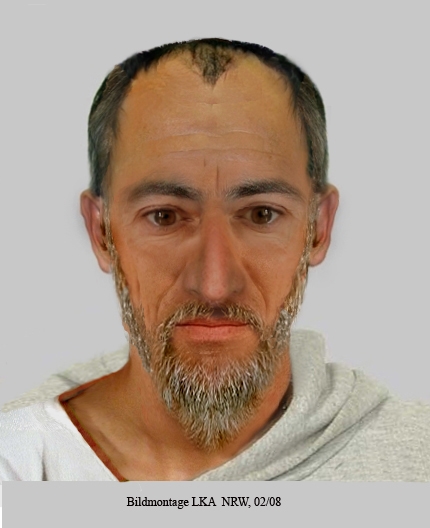
Scientists' reconstruction of Paul's possible likeness. Clues from the bible, archaeology, genetics and ethnic studies.  Just a guess, but interesting.

A map of Paul's three journeys.  The fourth, his one way trip to Rome, ventured even farther.

Resources:
Paul's timeline, Part I
Paul's timeline, Part II

Friday, May 21, 2010

50 Days Later

Pentecost (A study using the year C readings.)


Some people consider Christmas to be the Birthday of the Christian church.  Some might say Easter.  But it’s really Pentecost.  Pentecost is from the Greek for “Fiftieth Day” as in the Acts of the Apostles it came 10 days after Jesus’ Ascension into heaven, which was 40 days after Easter.  It has strong connections with the Jewish Pentecost, called the Festival of Shavout, which was when God gave Moses the 10 Commandments 50 days after the Exodus.


1)    Jot down what you know about the Holy Spirit and what you think you know.


John 14:15-27
[Jesus said,] “If you love me, show it by doing what I’ve told you. I will talk to the Father, and he’ll provide you another Friend so that you will always have someone with you. This Friend is the Spirit of Truth. The godless world can’t take him in because it doesn’t have eyes to see him, doesn’t know what to look for. But you know him already because he has been staying with you, and will even be in you!  I will not leave you orphaned. I’m coming back. In just a little while the world will no longer see me, but you’re going to see me because I am alive and you’re about to come alive. At that moment you will know absolutely that I’m in my Father, and you’re in me, and I’m in you.  The person who knows my commandments and keeps them, that’s who loves me. And the person who loves me will be loved by my Father, and I will love him and make myself plain to him.”

Judas (not Iscariot) said, “Master, why is it that you are about to make yourself plain to us but not to the world?”
“Because a loveless world,” said Jesus, “is a sightless world. If anyone loves me, he will carefully keep my word and my Father will love him—we’ll move right into the neighborhood! Not loving me means not keeping my words. The message you are hearing isn’t mine. It’s the message of the Father who sent me.  I’m telling you these things while I’m still living with you. The Friend, the Holy Spirit whom the Father will send at my request, will make everything plain to you. He will remind you of all the things I have told you. I’m leaving you well and whole. That’s my parting gift to you. Peace. I don’t leave you the way you’re used to being left—feeling abandoned, bereft.  So don’t be upset. Don’t be distraught.”

1)    What are the different names for the Holy Spirit being used here.  Underline them.


2)    What does or will the Holy Spirit do?


Acts 2:1-21;38-42

When the Feast of Pentecost [Shavout – the receiving of the 10 Commandments] came, they were all together in one place. Without warning there was a sound like a strong wind, gale force—no one could tell where it came from. It filled the whole building. Then, like a wildfire, the Holy Spirit spread through their ranks, and they started speaking in a number of different languages as the Spirit prompted them.

3)    What do you think really happened there?  Is this imagery or observation?  Why do you think?


There were many Jews staying in Jerusalem just then, devout pilgrims from all over the world. When they heard the sound, they came on the run. Then when they heard, one after another, their own mother tongues being spoken, they were thunderstruck. They couldn’t for the life of them figure out what was going on, and kept saying, “Aren’t these all Galileans? How come we’re hearing them talk in our various mother tongues?”

4)    How could that happen?  Why doesn’t that happen today?


Parthians, Medes, and Elamites; Visitors from Mesopotamia, Judea, and Cappadocia; Pontus and Asia, Phrygia and Pamphylia, Egypt and the parts of Libya belonging to Cyrene; Immigrants from Rome, both Jews and proselytes; Even Cretans and Arabs!  “They’re speaking our languages, describing God’s mighty works!”  Their heads were spinning; they couldn’t make head or tail of any of it. They talked back and forth, confused: “What’s going on here?”  Others joked, “They’re drunk on cheap wine.”

That’s when Peter stood up and, backed by the other eleven, spoke out with bold urgency: “Fellow Jews, all of you who are visiting Jerusalem, listen carefully and get this story straight. These people aren’t drunk as some of you suspect. They haven’t had time to get drunk—it’s only nine o’clock in the morning.  This is what the prophet Joel announced would happen:

“In the Last Days,” God says, “I will pour out my Spirit on every kind of people:
Your sons will prophesy, also your daughters;
Your young men will see visions, your old men dream dreams.
When the time comes, I’ll pour out my Spirit on those who serve me, men and women both, and they’ll prophesy.
I’ll set wonders in the sky above and signs on the earth below,
Blood and fire and billowing smoke, the sun turning black and the moon blood-red,
Before the Day of the Lord arrives, the Day tremendous and marvelous;
And whoever calls out for help to me, God, will be saved.”

5)    That’s from Joel 2:28-32 in the Bible.  How is what’s happening in Acts Chapter 2 like what was prophesied 800 years before?


…  Peter said, “Change your life. Turn to God and be baptized, each of you, in the name of Jesus Christ, so your sins are forgiven. Receive the gift of the Holy Spirit. The promise is targeted to you and your children, but also to all who are far away—whomever, in fact, our Master God invites.”  He went on in this vein for a long time, urging them over and over, “Get out while you can; get out of this sick and stupid culture!”  That day about three thousand took him at his word, were baptized and were signed up. They committed themselves to the teaching of the apostles, the life together, the common meal, and the prayers.

6)    What would a Pentecost moment look like now?  Can you imagine it in our church?


7)    What do you know about the Holy Spirit now?


Bonus Scripture: Romans 8:9-17
But if God himself has taken up residence in your life, you can hardly be thinking more of yourself than of him. Anyone, of course, who has not welcomed this invisible but clearly present God, the Spirit of Christ, won't know what we're talking about. But for you who welcome him, in whom he dwells—even though you still experience all the limitations of sin—you yourself experience life on God's terms. It stands to reason, doesn't it, that if the alive-and-present God who raised Jesus from the dead moves into your life, he'll do the same thing in you that he did in Jesus, bringing you alive to himself? When God lives and breathes in you (and he does, as surely as he did in Jesus), you are delivered from that dead life. With his Spirit living in you, your body will be as alive as Christ's!
So don't you see that we don't owe this old do-it-yourself life one red cent. There's nothing in it for us, nothing at all. The best thing to do is give it a decent burial and get on with your new life. God's Spirit beckons. There are things to do and places to go!
This resurrection life you received from God is not a timid, grave-tending life. It's adventurously expectant, greeting God with a childlike "What's next, Papa?" God's Spirit touches our spirits and confirms who we really are. We know who he is, and we know who we are: Father and children. And we know we are going to get what's coming to us—an unbelievable inheritance! We go through exactly what Christ goes through. If we go through the hard times with him, then we're certainly going to go through the good times with him!

8)  How have you experienced this paradox Paul shares?  "Even though you still experience all the limitations of sin—you yourself experience life on God's terms."


Resources:  while preparing this study, I cam across a couple neat sites.
Insight - an English youth group leader's blog with activities and lessons.  Not currently active, but had posted a lot before that.
Rethinking Youth Ministry - a blog with some good resources, lessons and ideas for youth ministry.  Current and topical.

Saturday, May 15, 2010

Hi, Dad. I'm in jail.

In the lectionary this week is the story of Paul and SIlas in jail.  As we ave been studying Acts for the apostles' stories, I thought it would be nice to do a thematic study.  This will also serve as a good introduction to Paul, whom I think we'll do next week as a good way to end the year.  Or we'll be studying Pentecost.  Tough choice!

The scriptures under consideration:
Acts 5:17-39
Then the high priest and all his associates, who were members of the party of the Sadducees, were filled with jealousy. They arrested the apostles and put them in the public jail.  But during the night an angel of the Lord opened the doors of the jail and brought them out. “Go, stand in the temple courts,” he said, “and tell the people the full message of this new life.”

At daybreak they entered the temple courts, as they had been told, and began to teach the people.  When the high priest and his associates arrived, they called together the Sanhedrin—the full assembly of the elders of Israel—and sent to the jail for the apostles. But on arriving at the jail, the officers did not find them there. So they went back and reported, “We found the jail securely locked, with the guards standing at the doors; but when we opened them, we found no one inside.”  On hearing this report, the captain of the temple guard and the chief priests were puzzled, wondering what would come of this.

Then someone came and said, “Look! The men you put in jail are standing in the temple courts teaching the people.”  At that, the captain went with his officers and brought the apostles. They did not use force, because they feared that the people would stone them.  Having brought the apostles, they made them appear before the Sanhedrin to be questioned by the high priest. “We gave you strict orders not to teach in this name,” he said. “Yet you have filled Jerusalem with your teaching and are determined to make us guilty of this man’s blood.”  Peter and the other apostles replied: “We must obey God rather than men!  The God of our fathers raised Jesus from the dead—whom you had killed by hanging him on a tree.  God exalted him to his own right hand as Prince and Savior that he might give repentance and forgiveness of sins to Israel.  We are witnesses of these things, and so is the Holy Spirit, whom God has given to those who obey him.”

When they heard this, they were furious and wanted to put them to death.  But a Pharisee named Gamaliel, a teacher of the law, who was honored by all the people, stood up in the Sanhedrin and ordered that the men be put outside for a little while.  Then he addressed them: “Men of Israel, consider carefully what you intend to do to these men.  Some time ago Theudas appeared, claiming to be somebody, and about four hundred men rallied to him. He was killed, all his followers were dispersed, and it all came to nothing.  After him, Judas the Galilean appeared in the days of the census and led a band of people in revolt. He too was killed, and all his followers were scattered.  Therefore, in the present case I advise you: Leave these men alone! Let them go! For if their purpose or activity is of human origin, it will fail.  But if it is from God, you will not be able to stop these men; you will only find yourselves fighting against God.”
Acts 12:5-17:
So Peter was kept in prison, but the church was earnestly praying to God for him.  The night before Herod was to bring him to trial, Peter was sleeping between two soldiers, bound with two chains, and sentries stood guard at the entrance.  Suddenly an angel of the Lord appeared and a light shone in the cell. He struck Peter on the side and woke him up. “Quick, get up!” he said, and the chains fell off Peter’s wrists.

Then the angel said to him, “Put on your clothes and sandals.” And Peter did so. “Wrap your cloak around you and follow me,” the angel told him.  Peter followed him out of the prison, but he had no idea that what the angel was doing was really happening; he thought he was seeing a vision.  They passed the first and second guards and came to the iron gate leading to the city. It opened for them by itself, and they went through it. When they had walked the length of one street, suddenly the angel left him.  Then Peter came to himself and said, “Now I know without a doubt that the Lord sent his angel and rescued me from Herod’s clutches and from everything the Jewish people were anticipating.”
Acts 16:16-39:
The crowd joined in the attack against Paul and Silas, and the magistrates ordered them to be stripped and beaten.  After they had been severely flogged, they were thrown into prison, and the jailer was commanded to guard them carefully.  Upon receiving such orders, he put them in the inner cell and fastened their feet in the stocks.

 About midnight Paul and Silas were praying and singing hymns to God, and the other prisoners were listening to them.  Suddenly there was such a violent earthquake that the foundations of the prison were shaken. At once all the prison doors flew open, and everybody’s chains came loose. The jailer woke up, and when he saw the prison doors open, he drew his sword and was about to kill himself because he thought the prisoners had escaped.  But Paul shouted, “Don’t harm yourself! We are all here!”  The jailer called for lights, rushed in and fell trembling before Paul and Silas. 30He then brought them out and asked, “Sirs, what must I do to be saved?”

They replied, “Believe in the Lord Jesus, and you will be saved—you and your household.”  Then they spoke the word of the Lord to him and to all the others in his house.  At that hour of the night the jailer took them and washed their wounds; then immediately he and all his family were baptized.  The jailer brought them into his house and set a meal before them; he was filled with joy because he had come to believe in God—he and his whole family.

When it was daylight, the magistrates sent their officers to the jailer with the order: “Release those men.”  The jailer told Paul, “The magistrates have ordered that you and Silas be released. Now you can leave. Go in peace.”  But Paul said to the officers: “They beat us publicly without a trial, even though we are Roman citizens, and threw us into prison. And now do they want to get rid of us quietly? No! Let them come themselves and escort us out.”  The officers reported this to the magistrates, and when they heard that Paul and Silas were Roman citizens, they were alarmed.  They came to appease them and escorted them from the prison, requesting them to leave the city.
Acts 24:22-27:
Then Felix, who was well acquainted with the Way, adjourned the proceedings. “When Lysias the commander comes,” he said, “I will decide your case.”  He ordered the centurion to keep Paul under guard but to give him some freedom and permit his friends to take care of his needs.

Several days later Felix came with his wife Drusilla, who was a Jewess. He sent for Paul and listened to him as he spoke about faith in Christ Jesus.  As Paul discoursed on righteousness, self-control and the judgment to come, Felix was afraid and said, “That’s enough for now! You may leave. When I find it convenient, I will send for you.”  At the same time he was hoping that Paul would offer him a bribe, so he sent for him frequently and talked with him.  When two years had passed, Felix was succeeded by Porcius Festus, but because Felix wanted to grant a favor to the Jews, he left Paul in prison.

2 Timothy 1:6-12.
For this reason I remind you to fan into flame the gift of God, which is in you through the laying on of my hands.  For God did not give us a spirit of timidity, but a spirit of power, of love and of self-discipline.

So do not be ashamed to testify about our Lord, or ashamed of me his prisoner. But join with me in suffering for the gospel, by the power of God, who has saved us and called us to a holy life—not because of anything we have done but because of his own purpose and grace. This grace was given us in Christ Jesus before the beginning of time, 10but it has now been revealed through the appearing of our Savior, Christ Jesus, who has destroyed death and has brought life and immortality to light through the gospel.  And of this gospel I was appointed a herald and an apostle and a teacher.  That is why I am suffering as I am. Yet I am not ashamed, because I know whom I have believed, and am convinced that he is able to guard what I have entrusted to him for that day.
The study from these scriptures I want to bring out both what the apostles were willing to suffer, as that is a great testament to the truth of their message, but the power of knowing the Lord is with you.  I plan on sharing the story of my friend Liz Walters, an IHM nun who was sent to federal prison repeatedly for nonviolent protests against nuclear arms.  She was shunted around, kept from friends and family and put in with the most violent offenders.  Often converting them and never coming to harm.  She really practiced the Jesus Way.

Scientists estimation of what
Paul of Tarsus might have looked like.
Doesn't capture his passion!
 Hi, Dad.  I’m in Jail

Early on the authorities tried a traditional way to stop the apostles – put ‘em in jail!  But from the first time it didn’t work.  In Acts 4, the Sadducees jailed Peter and John.  And then threatened them when that had no effect.  Then were just amazed when the threats had no effect.  Sometimes the authorities just couldn’t hold them.  The apostles, of course, were preaching life after death, and the Sadducees didn’t even believe in that.  Let alone Jesus.  Read Acts 5:17-39

1)    Why are Peter and the others willing to go to jail?  Why aren’t they afraid?


Peter also got sent to jail on his own.  Shortly after Herod had James, the brother of John, put to death, we can read about Peter's next imprisonment in Acts 12:5-17.

2)    Why would God set Peter free?  If you were Peter what would you do next?


Paul was in jail a lot, and it didn’t seem to bother him a bit.  After they freed a slave girl from an evil spirit, the owners had them beaten and locked up.   Read Acts 16:16-39.

3)    How are Paul and Silas able to praise God while jailed?  For what do they have to be thankful?


4)   How hard would it be to do something nice for your jailer?  Why would this event bring the jailer to believe?


But the apostles did not have a ‘Get Out of Jail Free’ card.  Many disciples were jailed long term or executed.  In Acts 24:22-27 it describes Paul spending two years in jail.  When he has a chance to be freed by convincing a king of his innocence, he insists on being sent to Rome for a trial.  Finally the new governor Festus sends him to Rome to be judged by the Romans.  On the way there’s a shipwreck and a viper… but that’s another story.

5)    How can it make a difference during tough times – even in jail – to know that God is with you?


6)    Why does sometimes God seem to help those in trouble and sometimes not?


These are not just old stories.  People today are jailed for proclaiming Jesus publically in places like China, where the government wants to control religion, India, where Hindus are offended by the idea of one God, and countries where Islam is a state religion and it is illegal to try to get anyone to change religions.  More often, Christians can be the victim of violence for being public or telling others about their faith.  Not everyone is called to suffer for their faith, or to be open to persecution.  That kind of testifying should only be the answer to prayer, when you know that God is calling you to do it.  It should also not be decided on alone, but prayed and discussed with other serious believers.  God’s direction will be clear.

But we are going to have hard times, and times when you could feel abandoned by God.  Like Joseph in the old testament when he was down the well or in jail in Egypt.  But the truth is that God is with us, as much as he was with Peter walking out of jail or Paul in prison for two years.

Paul wrote several of his epistles from prison or house arrest.  Here he writes to Timothy, his protégé, in 2 Timothy 1:6-12.  I’m sure Paul worried for Timothy’s faith since his teacher was in jail.  Take a minute to read the passage.

7)    If you could share with Paul your worst problem, what do you think he might tell you?