Saturday, May 21, 2011

Last Day

by smithadri @ Flickr
This is the last youth study before summer break. It's been a good year with this group, and they've had some nice insights into the Bible.

Going out of order today with the scriptures!

In Matthew 24, shortly before he was crucified. Jesus was asked about the last days. He told his disciples not to worry. He warned them that people will often misinterpret big events (wars, plagues, etc.) as being signs. Finally he says: 
Matthew 24:36-44“No one knows when that day or hour will come. Even the angels in heaven and the Son don’t know. Only the Father knows. When the Son of Man comes again, it will be exactly like the days of Noah. In the days before the flood, people were eating, drinking, and getting married until the day that Noah went into the ship. They were not aware of what was happening until the flood came and swept all of them away. That is how it will be when the Son of Man comes again.
“At that time two men will be working in the field. One will be taken, and the other one will be left. Two women will be working at a mill. One will be taken, and the other one will be left.
“Therefore, be alert, because you don’t know on what day your Lord will return. You realize that if a homeowner had known at what time of the night a thief was coming, he would have stayed awake. He would not have let the thief break into his house. Therefore, you, too, must be ready because the Son of Man will return when you least expect him.”

1) This is one of the places people get the idea for the Rapture, where they think Christians will suddenly vanish from wherever they are. Not all Christians believe in such a thing. Can you think of anything else Jesus might have meant?


2) If you believe this passage, what might you say to someone making a prediction about the end of the world?


After Jesus had ascended to heaven, the apostles and the disciples kept on preaching about him. Especially after Pentecost, when they received the Holy Spirit as a helper. Stephen is a great example of this. Some people connect Matthew 24 with how the disciple Stephen died. He was explaining how Jesus fit in with what the prophets had said, but the officials got very angry.
Acts 7:54-60 As council members listened to Stephen, they became noticeably furious. But Stephen was full of the Holy Spirit. He looked into heaven, saw God’s glory, and Jesus in the position of authority that God gives. So Stephen said, “Look, I see heaven opened and the Son of Man in the position of authority that God has given him!” But the council members shouted and refused to listen. Then they rushed at Stephen with one purpose in mind, and after they had thrown him out of the city, they began to stone him to death. The witnesses left their coats with a young man named Saul. While council members were executing Stephen, he called out, “Lord Jesus, welcome my spirit.” 60Then he knelt down and shouted, “Lord, don’t hold this sin against them.” After he had said this, he died.

3) Why do you think people connect this with what jesus was talking about in Matthew 24?


4) What else do you notice?


Before Jesus ascended to heaven, but after he was resurrected, Matthew records two interesting points.
Matthew 28:11-20 While the women were on their way, some of the guards went into the city. They told the chief priests everything that had happened. The chief priests gathered together with the leaders and agreed on a plan. They gave the soldiers a large amount of money and told them to say that Jesus’ disciples had come at night and had stolen his body while they were sleeping. They added, “If the governor hears about it, we’ll take care of it, and you’ll have nothing to worry about.” The soldiers took the money and did as they were told. Their story has been spread among the Jewish people to this day.

The eleven disciples went to the mountain in Galilee where Jesus had told them to go. When they saw him, they bowed down in worship, though some had doubts. When Jesus came near, he spoke to them. He said, “All authority in heaven and on earth has been given to me. So wherever you go, make disciples of all nations: Baptize them in the name of the Father, and of the Son, and of the Holy Spirit. Teach them to do everything I have commanded you. “And remember that I am always with you until the end of time.”

5) One of the things I wonder is why didn’t everyone believe when Jesus was raised, and this helps me understand. Can you think of anything today where people claim both sides of an issue?


6) People refer to what Jesus asks here as “the Great Commission.” A commission is when someone hires you to do a specific job, or when someone gives you the authority to do a certain job. An artist takes a commission to paint a portrait of someone, for example. Or a military officer receives a commission to be a captain in the army. Was what Jesus asked like one or both of these?


7) How do we make disciples of other people? Of a nation?


8) Are you a disciple? Do you want to be? How do you know?


Saturday, May 14, 2011

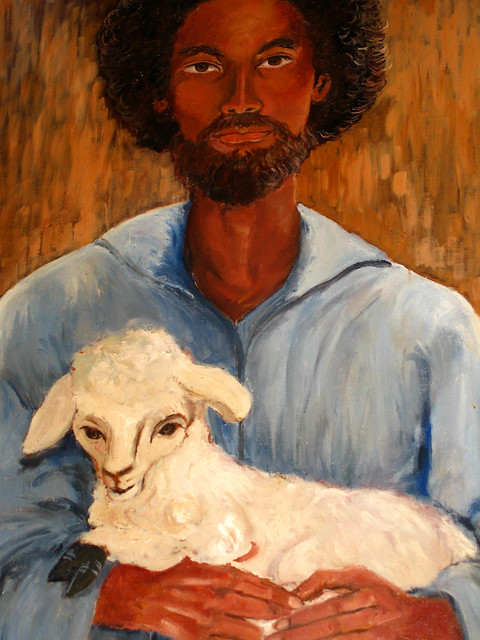
Baaaaa


Notes from Sitting at the Feet of Rabbi Jesus, by Spangler and Tverberg.  This is the Lakeshore Lutheran Fellowship's men's group study, which is a little longer.  There's a link to the youth study at the end.
 Painting from Grace Memorial Presbyterian in Pittsburgh.


Read John 10:1-21 Jesus, the Good Shepherd (Link goes to biblegateway.com's God's Word translation.)
1) Why were the Jews divided? “He’s possessed by a demon” is a pretty strong response to sheep talk.


It was not the first time Jesus mentioned shepherds. Read Luke 15:1-7 (also in Matthew 18:12-13)
All the tax collectors and sinners came to listen to Jesus. But the Pharisees and the scribes complained, “This man welcomes sinners and eats with them.”
Jesus spoke to them using this illustration: “Suppose a man has 100 sheep and loses one of them. Doesn’t he leave the 99 sheep grazing in the pasture and look for the lost sheep until he finds it? When he finds it, he’s happy. He puts that sheep on his shoulders and goes home. Then he calls his friends and neighbors together and says to them, ‘Let’s celebrate! I’ve found my lost sheep!’ I can guarantee that there will be more happiness in heaven over one person who turns to God and changes the way he thinks and acts than over 99 people who already have turned to God and have his approval.”

2) What do you notice about this parable?


Of course, if we’re talking shepherds…

Psalm 23 A psalm by David.
The Lord is my shepherd. I am never in need.
He makes me lie down in green pastures.
He leads me beside peaceful waters.
He renews my soul.
He guides me along the paths of righteousness for the sake of his name.
Even though I walk through the dark valley of death, because you are with me, I fear no harm.
Your rod and your staff give me courage.
You prepare a banquet for me while my enemies watch.
You anoint my head with oil.
My cup overflows.

Certainly, goodness and mercy will stay close to me all the days of my life, and I will remain in the Lord’s house for days without end.

3) How do you respond to this poem? Why?


4) This was famous among the Jews of Jesus’ day, just as it is now. If what Jesus said reminded people of this psalm, what would it mean to them?


In a nation of shepherds, as they still were, which even began with Abraham, the shepherd image might have meant more.

Isaiah 44:28 [The Lord] says about Cyrus, “He is my shepherd. He will do everything I want him to do. He says about Jerusalem, “It will be rebuilt. He says about the temple, “Your foundation will be laid.”

Psalm 78:70-72 He chose his servant David. He took him from the sheep pens. He brought him from tending the ewes that had lambs so that David could be the shepherd of the people of Jacob, of Israel, the people who belonged to the LORD. With unselfish devotion David became their shepherd. With skill he guided them.

5) With what do these passages connect the idea of a shepherd? What would that have meant to Jesus’ audience?


One of the most sheep heavy sections of scripture is Ezekiel 34. Read that now.
6) What connections are there between this chapter and what Jesus says in John 10?


7) What does this mean for Jesus’ listeners if they connected his words to this chapter? What is Jesus telling them?


8) If they accept what Jesus is saying here, because they believe through other signs, as they mention, what will that mean for them?


Jesus mentions sheep elsewhere, too. Read Matthew 25:31-33.
[Jesus speaking] “When the Son of Man comes in his glory and all his angels are with him, he will sit on his glorious throne. The people of every nation will be gathered in front of him. He will separate them as a shepherd separates the sheep from the goats. He will put the sheep on his right but the goats on his left.”

9) How does this connect with the passage from Ezekiel?


10) What is Jesus telling the people about himself here?


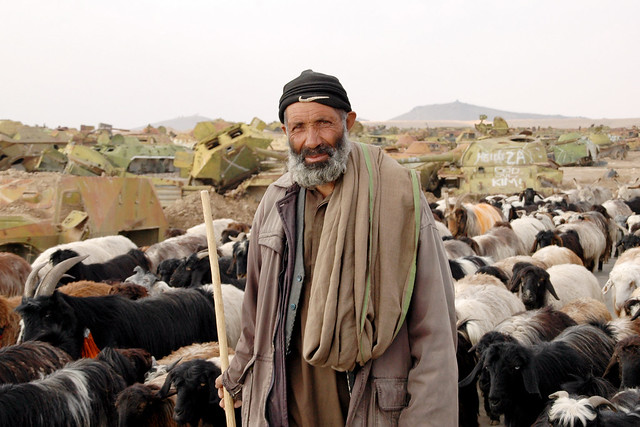
Shepherd outside Kabul, Afghanistan, 2008
11) Back to John 10… what is it saying to us today? Does your experience match what Jesus says or contradict it?
  • We’ll respond to Jesus’ voice.
  • Jesus will call us by name.
  • Jesus will lead us.
  • We will not follow a stranger – we’ll even run away from them.
  • We will have life and everything we need.


12) If we accept what Jesus is saying here, what will that mean for us?


Photo Credits: annspangler.com, KitAy and AfghanistanMatters @ Flickr,

Resources:
The terrific book linked up at the top.  Seriously worth your time.
The Hardest Question - site for bible teachers that follows the liturgical calendar.  They concentrate on posing the hardest questions that scripture raises for them, with different pastors contributing each week.

The youth version of this study is at Scribd.  A bit shorter, with all the scripture on the page.

This made for a great discussion with the men's group.  One of the things it brought up for us was how important it is to share the good news, and that one of the ways is by being a good follower.  That brings to mind this mini TED talk, on what it takes to start a movement.


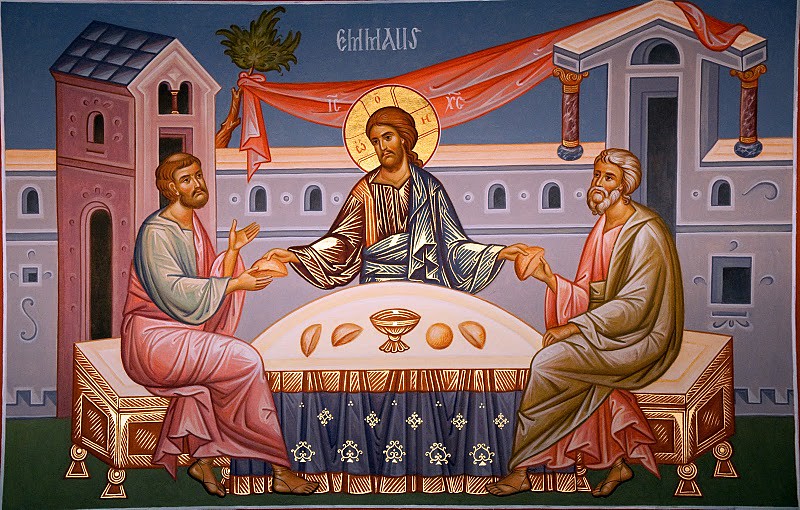
Road to Emmaus

(Sorry - just noticed I never posted last week's lesson!  It was meant as an assessment.  See where the students were after a year of studies in terms of being able to make sense of and pose questions about scripture on their own.  We read this because it has so many connections with last week's study on Thomas and the Road to Emmaus is such an important story about recognizing Jesus.)


Luke 24 Jesus Comes Back to Life (also in Matthew 28:1–10; Mark 16:1–8; John 20:1–10)
Very early on Sunday morning the women went to the tomb. They were carrying the spices that they had prepared. They found that the stone had been rolled away from the tomb. When they went in, they did not find the body of the Lord Jesus. While they were puzzled about this, two men in clothes that were as bright as lightning suddenly stood beside them. The women were terrified and bowed to the ground.

The men asked the women, “Why are you looking among the dead for the living one? He’s not here. He has been brought back to life! Remember what he told you while he was still in Galilee. He said, ‘The Son of Man must be handed over to sinful people, be crucified, and come back to life on the third day.’ ” Then the women remembered what Jesus had told them.

The women left the tomb and went back to the city. They told everything to the eleven apostles and all the others. The women were Mary from Magdala, Joanna, and Mary (the mother of James). There were also other women with them. They told the apostles everything. The apostles thought that the women’s story didn’t make any sense, and they didn’t believe them.

But Peter got up and ran to the tomb. He bent down to look inside and saw only the strips of linen. Then he went away, wondering what had happened.

Jesus Appears to Disciples on a Road to Emmaus
On the same day, two of Jesus’ disciples were going to a village called Emmaus. It was about seven miles from Jerusalem. They were talking to each other about everything that had happened. While they were talking, Jesus approached them and began walking with them. Although they saw him, they didn’t recognize him. He asked them, “What are you discussing?”

They stopped and looked very sad. One of them, Cleopas, replied, “Are you the only one in Jerusalem who doesn’t know what has happened recently?”

“What happened?” he asked. They said to him, “We were discussing what happened to Jesus from Nazareth. He was a powerful prophet in what he did and said in the sight of God and all the people. Our chief priests and rulers had him condemned to death and crucified. We were hoping that he was the one who would free Israel. What’s more, this is now the third day since everything happened. Some of the women from our group startled us. They went to the tomb early this morning and didn’t find his body. They told us that they had seen angels who said that he’s alive. Some of our men went to the tomb and found it empty, as the women had said, but they didn’t see him.”

Then Jesus said to them, “How foolish you are! You’re so slow to believe everything the prophets said! Didn’t the Messiah have to suffer these things and enter into his glory?” Then he began with Moses’ Teachings and the Prophets to explain to them what was said about him throughout the Scriptures. When they came near the village where they were going, Jesus acted as if he were going farther. They urged him, “Stay with us! It’s getting late, and the day is almost over.” So he went to stay with them.
While he was at the table with them, he took bread and blessed it. He broke the bread and gave it to them. Then their eyes were opened, and they recognized him. But he vanished from their sight. They said to each other, “Weren’t we excited when he talked with us on the road and opened up the meaning of the Scriptures for us?” That same hour they went back to Jerusalem. They found the eleven apostles and those who were with them gathered together. They were saying, “The Lord has really come back to life and has appeared to Simon.”

Then the two disciples told what had happened on the road and how they had recognized Jesus when he broke the bread.

1) I’ve been writing studies with questions for you guys all year. Now I want to know what questions you would write about this text. What do you notice, and how would you ask someone else about it?


Students spent more time noticing than posing questions.  They noticed that it was the women who returned to the tomb, that the disciples did not believe them (just like Thomas), that only Peter went to the tomb.  (I shared about John being mentioned in John's account.) And that even after that Peter didn't know what to think.  They noticed that the Emmaus story was on Easter, wondered why the disciples wouldn't recognize him.  They thought that Jesus pretended to be going on because it would have been rude to assume that you were invited in, or maybe to give them a chance to invite him.  They wondered if there was something distinctive about how Jesus broke the bread, and figured that the disciples must have seen him do that before.  They noticed that despite the long walk (2-3 hours) they went back, and that the apostles were still in the room.  They connected that the end of this story was the beginning of last week's.

Photo credit: bobosh_t @ Flickr from the Shkolnik Icons in St. Paul's Orthodox Church, Dayton, OH

Saturday, April 30, 2011

So What?

Alleluia!  Christ is Risen!
He is risen, indeed.  Alleluia!

But so what?

Shortly before Jesus went to Jerusalem to die, after Jesus raised Lazarus from the dead, we hear about Thomas the apostle.
John 11:3-16
So the sisters sent a messenger to tell Jesus, “Lord, your close friend is sick.” When Jesus heard the message, he said, “His sickness won’t result in death. Instead, this sickness will bring glory to God so that the Son of God will receive glory through it.” Jesus loved Martha, her sister, and Lazarus. Yet, when Jesus heard that Lazarus was sick, he stayed where he was for two more days.

Then, after the two days, Jesus said to his disciples, “Let’s go back to Judea.” The disciples said to him, “Rabbi, not long ago the Jews wanted to stone you to death. Do you really want to go back there?” Jesus answered, “Aren’t there twelve hours of daylight? Those who walk during the day don’t stumble, because they see the light of this world. However, those who walk at night stumble because they have no light in themselves.” After Jesus said this, he told his disciples, “Our friend Lazarus is sleeping, and I’m going to Bethany to wake him.”

His disciples said to him, “Lord, if he’s sleeping, he’ll get well.” Jesus meant that Lazarus was dead, but the disciples thought Jesus meant that Lazarus was only sleeping. Then Jesus told them plainly, “Lazarus has died, but I’m glad that I wasn’t there so that you can grow in faith. Let’s go to Lazarus.” Thomas, who was called Didymus, said to the rest of the disciples, “Let’s go so that we, too, can die with Jesus.”

1) Didymus means twin. Do you know what happened when Jesus and the disciples got to Bethany, where Lazarus had lived?


2) What do you think of Thomas?


John 20:19-31
That Sunday evening, the disciples were together behind locked doors because they were afraid of the Jews. Jesus stood among them and said to them, “Peace be with you!” When he said this, he showed them his hands and his side. The disciples were glad to see the Lord. Jesus said to them again, “Peace be with you! As the Father has sent me, so I am sending you.” After he had said this, he breathed on the disciples and said, “Receive the Holy Spirit. Whenever you forgive sins, they are forgiven. Whenever you don’t forgive them, they are not forgiven.”

Thomas, one of the twelve apostles, who was called Didymus, wasn’t with them when Jesus came. The other disciples told him, “We’ve seen the Lord.” Thomas told them, “I refuse to believe this unless I see the nail marks in his hands, put my fingers into them, and put my hand into his side.”

A week later Jesus’ disciples were again in the house, and Thomas was with them. Even though the doors were locked, Jesus stood among them and said, “Peace be with you!” Then Jesus said to Thomas, “Put your finger here, and look at my hands. Take your hand, and put it into my side. Stop doubting, and believe.”

Thomas responded to Jesus, “My Lord and my God!” Jesus said to Thomas, “You believe because you’ve seen me. Blessed are those who haven’t seen me but believe.”
Doubting Thomas, painting by Caravaggio (1602-03), oil on canvas. Sanssouci, Potsdam

3) What do you think of Thomas and what he said?


We’ll read an account of this night from The Robe, which is about a Roman soldier who was in charge of crucifying Jesus.

4) What would it have been like to be there?


5) Jesus died to save us from our sins. His death bought our forgiveness. But why was He resurrected? Why not just die and go to heaven?


1st Corinthians 15:12-23
If we have told you that Christ has been brought back to life, how can some of you say that coming back from the dead is impossible? If the dead can’t be brought back to life, then Christ hasn’t come back to life. If Christ hasn’t come back to life, our message has no meaning and your faith also has no meaning. In addition, we are obviously witnesses who lied about God because we testified that he brought Christ back to life. But if it’s true that the dead don’t come back to life, then God didn’t bring Christ back to life. Certainly, if the dead don’t come back to life, then Christ hasn’t come back to life either. If Christ hasn’t come back to life, your faith is nonsense and sin still has you in its power. Then those who have died as believers in Christ no longer exist. If Christ is our hope in this life only, we deserve more pity than any other people.

But now Christ has come back from the dead. He is the very first person of those who have died to come back to life. Since a man brought death, a man also brought life back from death. As everyone dies because of Adam, so also everyone will be made alive because of Christ. This will happen to each person in his own turn. Christ is the first, then at his coming, those who belong to him will be made alive.

6) Why would there have been people who said coming back to life is impossible? Are there people like that today?


7) What does Paul say about why was Jesus resurrected?


8) Jot down: what difference does it make to you that Jesus was resurrected?


Photo Credits: ChicagoGeek@Flickr, Wikimedia Commons
EDIT:  Must-read sermon from Doubting Pastor Nadia on this gospel. Prepare for the God who busts in through locked doors!

Thursday, April 14, 2011

Open

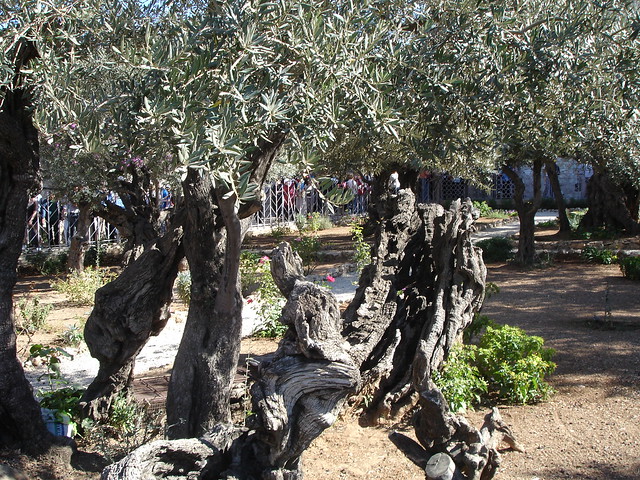
Gethsemane today.
Start with prayer:
  • Something you know about God – Praise Him!
  • Take a minute to talk to God about something you wish you hadn’t done. (Not out loud.)
  • Thank God for something He’s done.
  • Is there anything you want God to do?

Matthew 26:36-42
Then Jesus went with the disciples to a place called Gethsemane. He said to them, “Stay here while I go over there and pray.” He took Peter and Zebedee’s two sons with him. He was beginning to feel deep anguish. Then he said to them, “My anguish is so great that I feel as if I’m dying. Wait here, and stay awake with me.” After walking a little farther, he quickly bowed with his face to the ground and prayed, “Father, if it’s possible, let this cup of suffering be taken away from me. But let your will be done rather than mine.”

When he went back to the disciples, he found them asleep. He said to Peter, “Couldn’t you stay awake with me for one hour? 41Stay awake, and pray that you won’t be tempted. You want to do what’s right, but you’re weak.” Then he went away a second time and prayed, “Father, if this cup cannot be taken away unless I drink it, let your will be done.”

Psalm 13 (a psalm by David.)
How long, O Lord? Will you forget me forever?
How long will you hide your face from me?
How long must I make decisions alone with sorrow in my heart day after day?
How long will my enemy triumph over me?

Look at me! Answer me, O Lord my God!
Light up my eyes, or else I will die and my enemy will say, “I have overpowered him.”
My opponents will rejoice because I have been shaken.

But I trust your mercy.
My heart finds joy in your salvation.
I will sing to the Lord because he has been good to me.

Watch the Nooma called Open. (019)


(This is a trailer. Of course you can find the whole thing on you tube, but you might consider supporting the ministry by buying it.)

1. What did you notice?


2. Why is it important to be honest – even brutally honest – with God about how we feel? How was David or Jesus honest?


3. Why should we pray? What will we get out of it?


Before Jesus went to the garden, he prayed for his followers – including us!

John 17:9-26
“I pray for them. I’m not praying for the world but for those you gave me, because they are yours. Everything I have is yours, and everything you have is mine. I have been given glory by the people you have given me. I won’t be in the world much longer, but they are in the world, and I’m coming back to you. Holy Father, keep them safe by the power of your name, the name that you gave me, so that their unity may be like ours. While I was with them, I kept them safe by the power of your name, the name that you gave me. I watched over them, and none of them, except one person, became lost. So Scripture came true.

“But now, Father, I’m coming back to you. I say these things while I’m still in the world so that they will have the same joy that I have. I have given them your message. But the world has hated them because they don’t belong to the world any more than I belong to the world. I’m not asking you to take them out of the world but to protect them from the evil one. They don’t belong to the world any more than I belong to the world.

Use the truth to make them holy. Your words are truth. I have sent them into the world the same way you sent me into the world. I’m dedicating myself to this holy work I’m doing for them so that they, too, will use the truth to be holy.

“I’m not praying only for them. I’m also praying for those who will believe in me through their message. I pray that all of these people continue to have unity in the way that you, Father, are in me and I am in you. I pray that they may be united with us so that the world will believe that you have sent me. I have given them the glory that you gave me. I did this so that they are united in the same way we are. I am in them, and you are in me. So they are completely united. In this way the world knows that you have sent me and that you have loved them in the same way you have loved me.

“Father, I want those you have given to me to be with me, to be where I am. I want them to see my glory, which you gave me because you loved me before the world was made. Righteous Father, the world didn’t know you. Yet, I knew you, and these disciples have known that you sent me. I have made your name known to them, and I will make it known so that the love you have for me will be in them and I will be in them.”

4. How can you know that Jesus was praying this for you as well as praying it for his disciples then?


5. What are three of the several things Jesus prayed for us? Pick one: why would he want that for us?


6. What part of this prayer matters the most to you? Why does it matter to know that Jesus wants that for you


7. Write down one thing that you got out of today’s lesson.


Photo credits: from Flickr, lyng883; from servicioskoinonia.org via markdaniels.blogspot.com

Monday, April 11, 2011

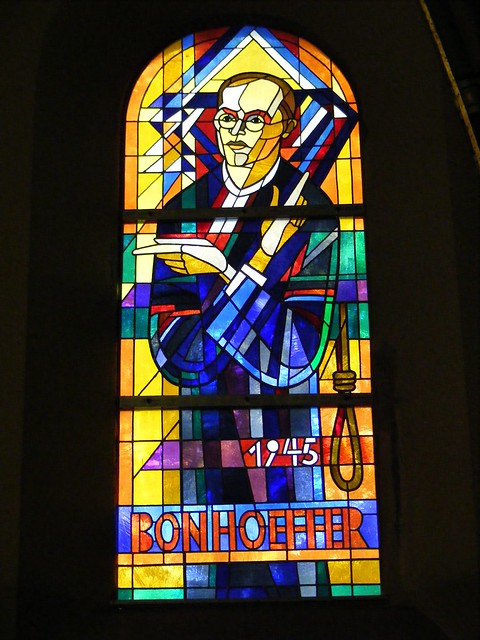
Dietrich Boenhoeffer

My last men's study was on April 9th, and Randy Deater brought it up as the anniversary of Dietrich Boenhoeffer's martyrdom.  Then he sent along this terrific poem by Auden, so I just wanted to share.


Friday's Child
(In memory of Dietrich Bonhoeffer, martyred at Flossenbürg, April 9, 1945)

He told us we were free to choose
But, children as we were, we thought---
"Paternal Love will only use
Force in the last resort

On those too bumptious to repent."
Accustomed to religious dread,
It never crossed our minds He meant
Exactly what He said.

Perhaps He frowns, perhaps He grieves,
But it seems idle to discuss
If anger or compassion leaves
The bigger bangs to us.

What reverence is rightly paid
To a Divinity so odd
He lets the Adam whom He made
Perform the Acts of God?

It might be jolly if we felt
Awe at this Universal Man
(When kings were local, people knelt);
Some try to, but who can?

The self-observed observing Mind
We meet when we observe at all
Is not alarming or unkind
But utterly banal.

Though instruments at Its command
Make wish and counterwish come true,
It clearly cannot understand
What It can clearly do.

Since the analogies are rot
Our senses based belief upon,
We have no means of learning what
Is really going on,

And must put up with having learned
All proofs or disproofs that we tender
Of His existence are returned
Unopened to the sender.

Now, did He really break the seal
And rise again? We dare not say;
But conscious unbelievers feel
Quite sure of Judgement Day.

Meanwhile, a silence on the cross,
As dead as we shall ever be,
Speaks of some total gain or loss,
And you and I are free

To guess from the insulted face
Just what Appearances He saves
By suffering in a public place
A death reserved for slaves.

1958 W.H.Auden

Classic Auden, requesting multiple readings and leaving the door open for you to assist with your own meaning.  The Friday's Child must be a reference to the children's poem

Monday's child is fair of face,
Tuesday's child is full of grace,
Wednesday's child is full of woe,
Thursday's child has far to go,
Friday's child is loving and giving,
Saturday's child works hard for his living,
And the child that is born on the Sabbath day
Is bonny and blithe, and good and gay.
Certainly Bonhoeffer was loving and giving in the sacrificial way of Jesus.  intentionally.  I found this quote at Tolle Lege.

“The cross is laid on every Christian. The first Christ-suffering which every man must experience is the call to abandon the attachments of this world. It is that dying of the old man which is the result of his encounter with Christ. As we embark upon discipleship we surrender ourselves to Christ in union with His death—we give over our lives to death. Thus it begins; the cross is not the terrible end to an otherwise god-fearing and happy life, but it meets us at the beginning of our communion with Christ.

When Christ calls a man, He bids him come and die. It may be a death like that of the first disciples who had to leave home and work to follow Him, or it may be a death like Luther’s, who had to leave the monastery and go out into the world. But it is the same death every time—death in Jesus Christ, the death of the old man at his call.”

–Dietrich Bonhoeffer, The Cost of Discipleship (London: SCM Press, 1948/2001), 44.

Photo Credit:  Felix O at Flickr

Friday, April 8, 2011

Hope and Prayer

No youth study this week but we do have a Men's study.  It's an overview of what we've been doing for the youth, with the questions tuned for this group of Wise Guys.  It's a bit long (3 pager), so if we're out of time at (12), I'll skip to (18).  While we're on prayer, Bev Van Kampen passed along the Operation World prayer movement that helps in praying for the countries around the world.  My family started tonight with Afghanistan.
Manliest prayer image I could find.
Romanian soldiers praying in Afghanistan.

During Lent there are three traditional disciplines, all of which are worth considering throughout the year: prayer, almsgiving and fasting. But certainly prayer is something we are called to constantly. So then during Lent, maybe it’s really an opportunity to reexamine what we’re doing.

0) What is the purpose of prayer to you?

One model of prayer that has been helpful for many people is the ACTS prayer format. The idea is to pray scripturally, following the modes of prayer that we see people using in the Bible.

Adoration – We adore God for who he is. (No asking for anything.) “Let us fix our eyes on Jesus, the author and perfecter of our faith, who for the joy set before him endured the cross.” Hebrews 12:2
Example: Praise the names of God. 1 Chronicles 29:11 and 2 Corinthians 12:9

Confession – We see our sin as God sees it. “If we confess our sins, he is faithful and just and will forgive us our sins and purify us from all unrighteousness.” 1 John 1:9
Example: Confess hiding our sins. Psalm 32:3-5, Psalm 51:6a, Psalm 139:23-24 and James 5:16

Thanksgiving – We focus on what God has done. “Great are the works of the Lord; they are pondered by all who delight in them.” Psalm 111:2
Example: Thank you for providing a way. Isaiah 30:21, Isaiah 42:16 and Proverbs 15:19

Supplication – We call on God for guidance and help, and intercede for others. “And I will do whatever you ask in my name.” John 14:13a
Example: Please help our friend to know Jesus voice and follow him. John 10:4-5, John 18:37 and Revelation 3:20

I think an alliterating friend I have might have said - Adore, Admit, Acknowledge and Ask.

1) Which of these is especially fruitful for you? Are any more difficult or more likely to be omitted?


Of course, this is an area where Jesus taught directly. The Our Father was what Jesus told the apostles when they asked him to teach them how to pray. We find this in the Gospel of Matthew, chapter 6.

We often pray a version close to the first widespread English translation, King James, followed by the more modern God’s Word translation.


Our Father which art in heaven, Hallowed be thy name.
Thy kingdom come, Thy will be done in earth, as it is in heaven.
Give us this day our daily bread.
And forgive us our trespass, as we forgive those who trespass against us.
And lead us not into temptation, but deliver us from evil:
For thine is the kingdom, and the power, and the glory, for ever. Amen.
Our Father in heaven, let your name be kept holy.
Let your kingdom come.
Let your will be done on earth as it is done in heaven.
Give us our daily bread today.
Forgive us as we forgive others.
Don’t allow us to be tempted.
Instead, rescue us from the evil one.

2) Is there anything that we might be missing by praying the older version?

3) Jews are not allowed to even speak the name of God, that we say as Yahweh. How would they have reacted to being told to call him “Our Father?” Some writers think that the word Jesus used is more like Daddy.


4) I usually remember to pray “forgive me,” but I don’t usually tack on “as I forgive other people.” And in case we didn’t catch that difference, right afterward Jesus says: “If you forgive the failures of others, your heavenly Father will also forgive you. But if you don’t forgive others, your Father will not forgive your failures.” Why did Jesus put that in his prayer instructions?


5) Is there anything else in this prayer about which you wonder?


6) Do you see any of the ACTS principles in the Our Father?


7) One of the problems with knowing a prayer by memory is that it’s easy to pray it too fast and without thinking. Do you have any tips for praying the Our Father instead of reciting it?


I think Jesus wasn’t telling us to pray with these exact words, but remembering these ideas. The most important Jews at the time tended to pray making a big fuss, and acting all holy. With lots of very precise gestures and bows and rituals. Jesus was freeing his disciples from all of that. Telling them it’s simple, and that prayer is talking to a loving parent who wants to do good things for you.

In the gospel of Luke, after he shares Jesus teaching the Our Father, he shares the story of a persistent and annoying friend. Read Luke 11:5-11

8) In the second paragraph, Jesus explains the parable, which he doesn’t always do. How does he get that point out of the bread story?


9) What does the “Even though you’re evil…” part mean? Is Jesus calling us evil? What is his point?


Later in the gospel of Luke, Jesus again is teaching about prayer. Read Luke 18:1-8

10) This time Luke gives the reason for the parable up front. How does this story fit “pray all the time and never give up?”


11) Why does Jesus make the judge, who’s in God’s place in the story, a dishonest judge?


12) The last sentence has gotten a LOT of attention. What do you think it means and why is it in this story?


Nadia Bolz-Weber (the Sarcastic Lutheran) has written: (abridged from http://bit.ly/eHgBul):

The best way to suck the life out of a parable is by attempting to neatly allegorize it or worse try to figure out the so-called moral of the story. Parables aren't about morals they are about truth - hidden, unyielding, disruptive truth. The kind of truth that simply can't be contained.

13) Why would telling the point of a parable “ruin” it?


It's tempting to look straight on and see the story of the persistent widow as a self-help technique by which we can get all the cash and prizes we want out of God's divine vending machine if we just kind of bug God to death through ceaseless prayer, when it comes down to it, we know better. … Do we only think God answers by giving us what we ask for?

14) What does it mean for God to answer a prayer?


Yet Luke tells us that this parable is about our need to pray constantly and not lose hope. So maybe an alternate reading of this parable is that it's yes, about persistence and prayer and hope but maybe it's about the persistence of God. … Maybe prayer isn't the way in which we manipulate God but is simply the posture in which we finally become worn down by God's persistence. God's persistence in loving us …God's persistence in forgiving and being known and being faithful and always, always, always bringing life out of death.

15) I connect this with the weird idea that by praying we are changing God’s mind. If praying changes me, it makes more sense. But then why do we pray?


In Luke and throughout scripture we are told to pray constantly, pray without ceasing, so that we do not lose heart. And how do you pray without ceasing? Only by having others pray for you, with you. … So to pray without ceasing is not an individual sport if anything it's a relay race. It’s what we do for each other, and it’s what we do for the world. And these prayers are like these gossamer threads connecting us to God and God’s people. When we pray on another's behalf we become connected to that person through God, and we become connected to God through that person. And in these connections God gets stuff done. Not necessarily the stuff we think God should do, but the work that God is always about, which is redeeming us and all of creation. These gossamer threads of prayer, woven through the space and time of our lives, are like the network through which God sends God's own love for the world.

16) What is she trying to get at here?


It hurts sometimes. But the more you see suffering and injustice around you, the more you pray and the more you pray the more connected you are to that suffering, and the more connected you are to that suffering the more connected you are to the crucified and risen Christ. For these silken threads of prayer which connect us to God and to one another and even to our enemies are how God is stitching our broken humanity back together. So church, pray without ceasing and do not lose heart. For God has some stuff to do.

17) The way humans are we can’t go from no prayer to prayer without ceasing. We have to build up and train for it. So to start, when are some times in your day you could or do pray?


18) If you were teaching a new Christian about prayer, or a Christian that has little prayer experience, what would you emphasize?

Photo credit:  AfghanistanMatters and spiritz from Flickr.